The requirements for tunnel lighting are determined by the nature of
the human eye. The tunnel lighting must be controlled such that users,
both during the day and by night, can approach, pass through and exit
the tunnel without changing direction or speed with a degree of safety
equal to that on the approach road. Especially by day the human eye
needs to adapt to the lower lighting levels in a tunnel. The threshold
lighting needs to be controlled such that drivers can perceive obstacles
in the tunnel early enough to stop the vehicle. At night, it is
sufficient if the lighting conditions in the tunnel at least correspond
to the lighting conditions outside the tunnel.
Tunnel lighting needs to be adapted to these environmental conditions, following these national and international guidelines:
- CIE 88:2004 Guide for the lighting of road tunnels and underpasses
- CEN Report CR 14380 Lighting applications – Tunnel lighting
- DIN 67524 Beleuchtung von Straßentunneln und Unterführungen (DE)
- RVS 09.02.41 Tunnelausrüstung Lichttechnik Beleuchtung (AT)
The Austrian RVS provides for a reduction of the lighting in the
interior zone at night depending on the illuminance in front of the
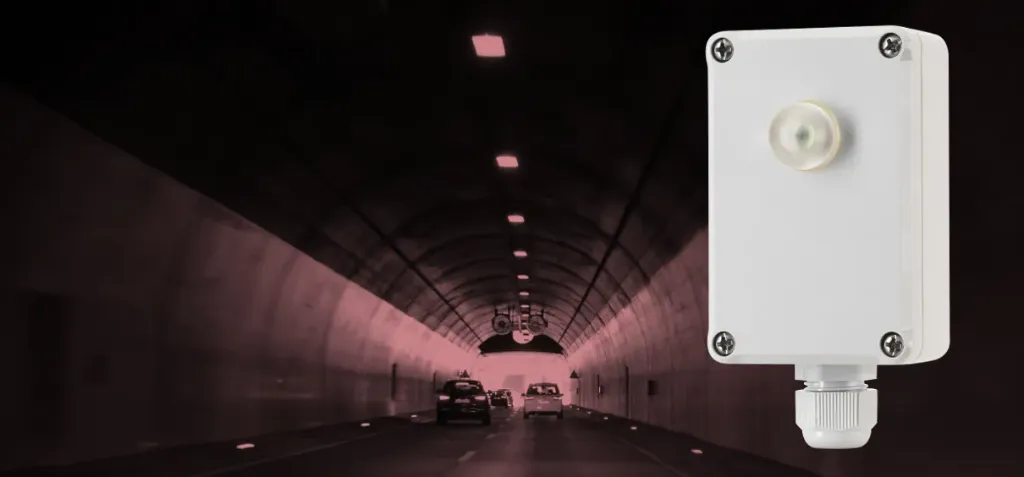
portal. The illuminance sensor measures the illuminance
semi-spherically. The measured value thus describes the luminous flux
that strikes the surface of the transparent hemisphere of the sensor.
Features
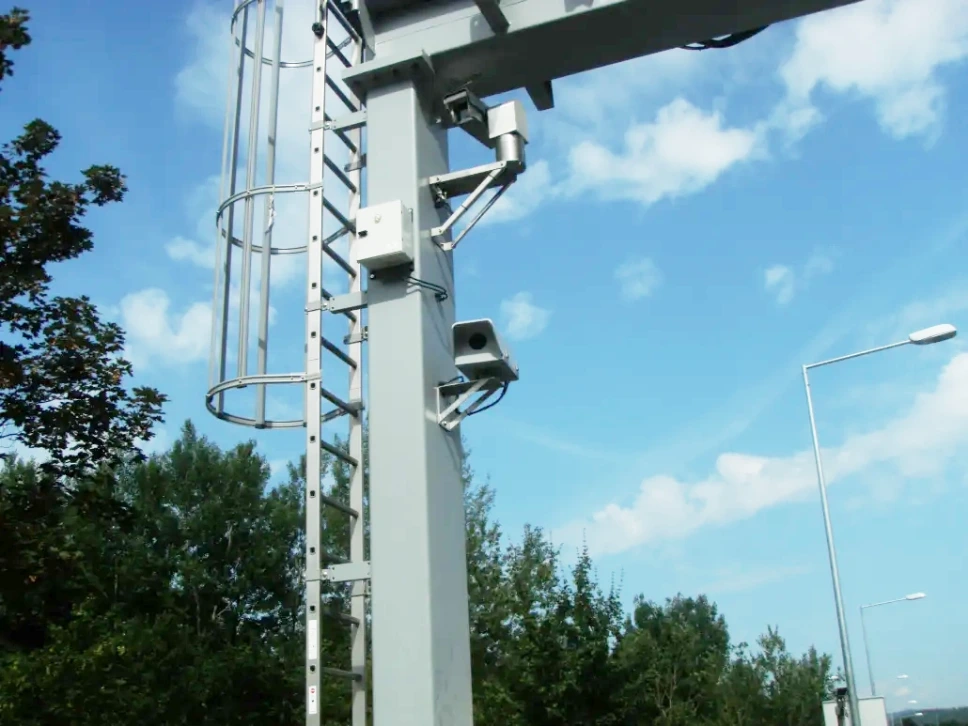
- Photometer for measuring the illuminance at the sensor mounting location (in-situ)
- Cosinus corrected
- V(λ) adaptation
- Delivered ready for connection
- Impact-resistant IP65 ABS housing
- Optional device version with heated IP65 outer housing available
Avantages
- Specifically deigned for tunnel applications
- Customisable measuring range
- Housing resistant against corrosion, UV, oil and acid